Tuesday, June 2, 2009

Forex Technical Analysis

EUR/USD trend: buy.
GBP/USD trend: buy.
USD/JPY trend: hold.
EUR/JPY trend: buy.

Floor Pivot Points
Pair 3rd Sup 2nd Sup 1st Sup Pivot 1st Res 2nd Res 3rd Res
EUR/USD 1.3533 1.3663 1.3909 1.4039 1.4285 1.4415 1.4661
GBP/USD 1.5487 1.5631 1.5909 1.6054 1.6332 1.6476 1.6754
USD/JPY 91.27 92.84 94.08 95.66 96.90 98.48 99.72
EUR/JPY 128.17 129.82 132.38 134.03 136.59 138.24 140.80
Woodie’s Pivot Points
Pair 2nd Sup 1st Sup Pivot 1st Res 2nd Res
EUR/USD 1.3692 1.3968 1.4068 1.4344 1.4444
GBP/USD 1.5665 1.5976 1.6087 1.6398 1.6510
USD/JPY 92.76 93.92 95.58 96.74 98.39
EUR/JPY 130.04 132.83 134.25 137.04 138.47
Camarilla Pivot Points
Pair 4th Sup 3rd Sup 2nd Sup 1st Sup 1st Res 2nd Res 3rd Res 4th Res
EUR/USD 1.3949 1.4053 1.4087 1.4122 1.4190 1.4225 1.4259 1.4363
GBP/USD 1.5955 1.6071 1.6109 1.6148 1.6226 1.6264 1.6303 1.6419
USD/JPY 93.78 94.55 94.81 95.07 95.59 95.84 96.10 96.88
EUR/JPY 132.62 133.78 134.17 134.55 135.33 135.71 136.10 137.26
Tom DeMark’s Pivot Points
Pair EUR/USD GBP/USD USD/JPY EUR/JPY
Resistance 1.4350 1.6404 97.69 137.41
Support 1.3974 1.5982 94.87 133.20
Fibonacci Retracement Levels
Pairs EUR/USD GBP/USD USD/JPY EUR/JPY
100.0% 1.4168 1.6199 97.23 135.68
61.8% 1.4024 1.6037 96.16 134.07
50.0% 1.3980 1.5987 95.82 133.57
38.2% 1.3936 1.5938 95.49 133.07
23.6% 1.3881 1.5876 95.08 132.46
0.0% 1.3792 1.5776 94.42 131.46


Blogging About Forex for 3 Years


Today is the 3rd anniversary of the EarnForex blog. 3 years ago I’ve made my first post (which was less than anything meaningful) to this blog. Many posts have been made since then and I hope that the quality of the content has also improved since 2006. The process of blogging about something as commercial as Forex is far from trivial. Keeping the reader’s interest is one thing, but being useful to the traders that risk their own money is completely another. I hope that my blog is still both interesting and useful to the readers, and Forex traders of all categories find something here that makes them return again and again. In the near future I plan to start posting more materials that are related to the actual Forex trading — most probably it will be some sort graphical chart analysis. So, stay tuned for some new interesting content :-).

Forex Money Rain:


Forex Money Rain:

Money rain corporation is a Forex broker with a MetaTrader 4 platform that offers quite interesting conditions to its traders. Its description was uploaded to my site today. MRC offers trading mini accounts from $100. The most interesting advantage it has is the interest on the trade balance, which is quite generous. Trading accounts can be kept in several currencies — the yearly interest rate depends on the account’s currency and it’s quite close to the refinancing rate set by the central bank of the given currency. Other highlights of Money Rain broker include:
  • 1-3 pip spread on EUR/USD; depends on the account type.
  • Deposit funds via WebMoney, wire transfer and credit card.
  • Trade Forex, CFD, commodities and precious metals.


EUR/USD Rises for Third Day as GM Goes Bankrupt:

Euro continued to advance sharply against the U.S. dollar today as the U.S. are witnessing their biggest bankruptcy case in history. Economic indicators that came out from the United States today (other than GM bankruptcy) were better than expected. EUR/USD is now trading near 1.4209.

Personal Income rose by 0.5% in April after decreasing by 0.2% in March (revised up from -0.3%). Personal spending decreased by 0.1% in April, following 0.3% drop in March (revised down from -0.2%). Forecasts for both indicators showed -0.2%.

Construction Spending at seasonally adjusted annual rate rose by 0.8% in April after 0.4% gain in March (revised up from 0.4% growth). Median forecast by the analysts pointed at 0.8% decline.

ISM in Manufacturing Sector rose from 40.1% to 42.8% in May — almost the same as expected (42%).


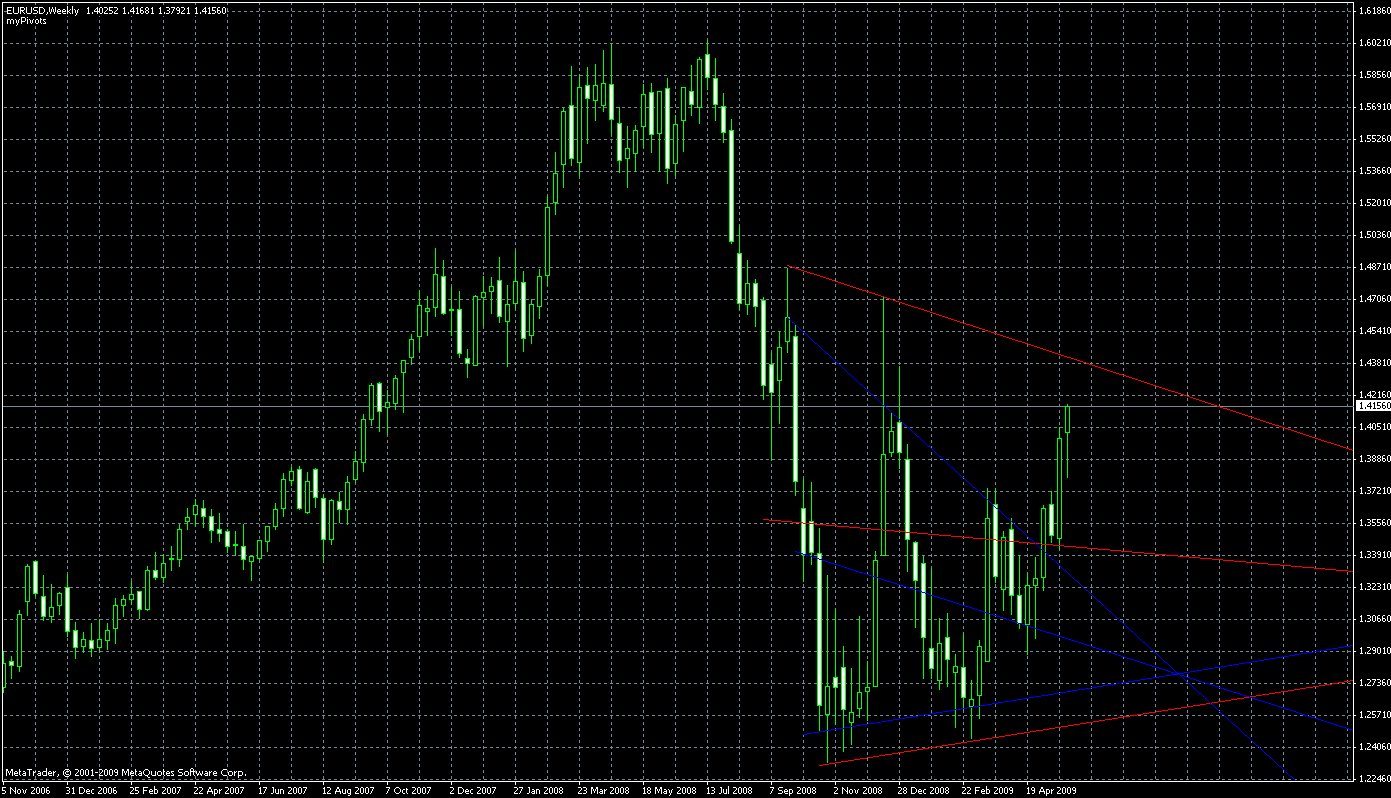
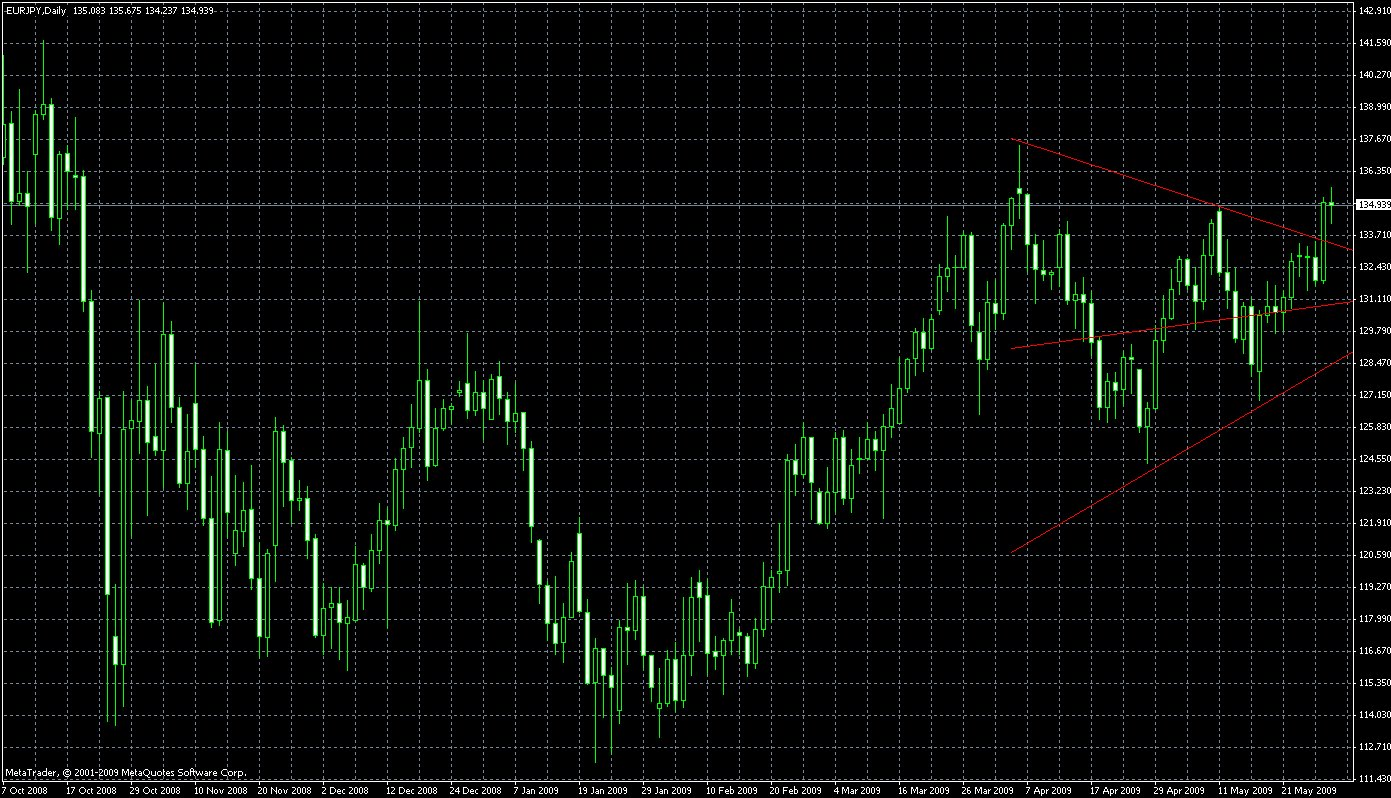
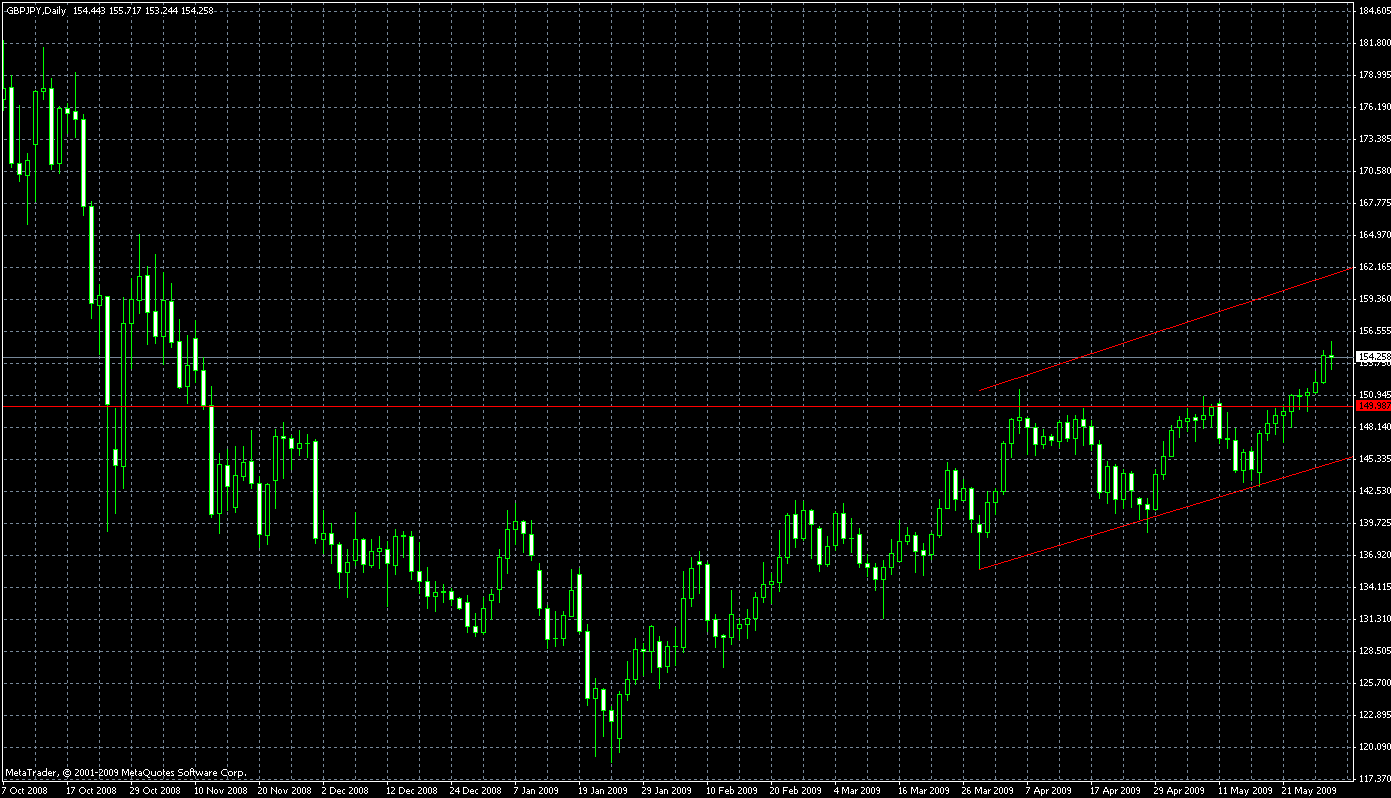
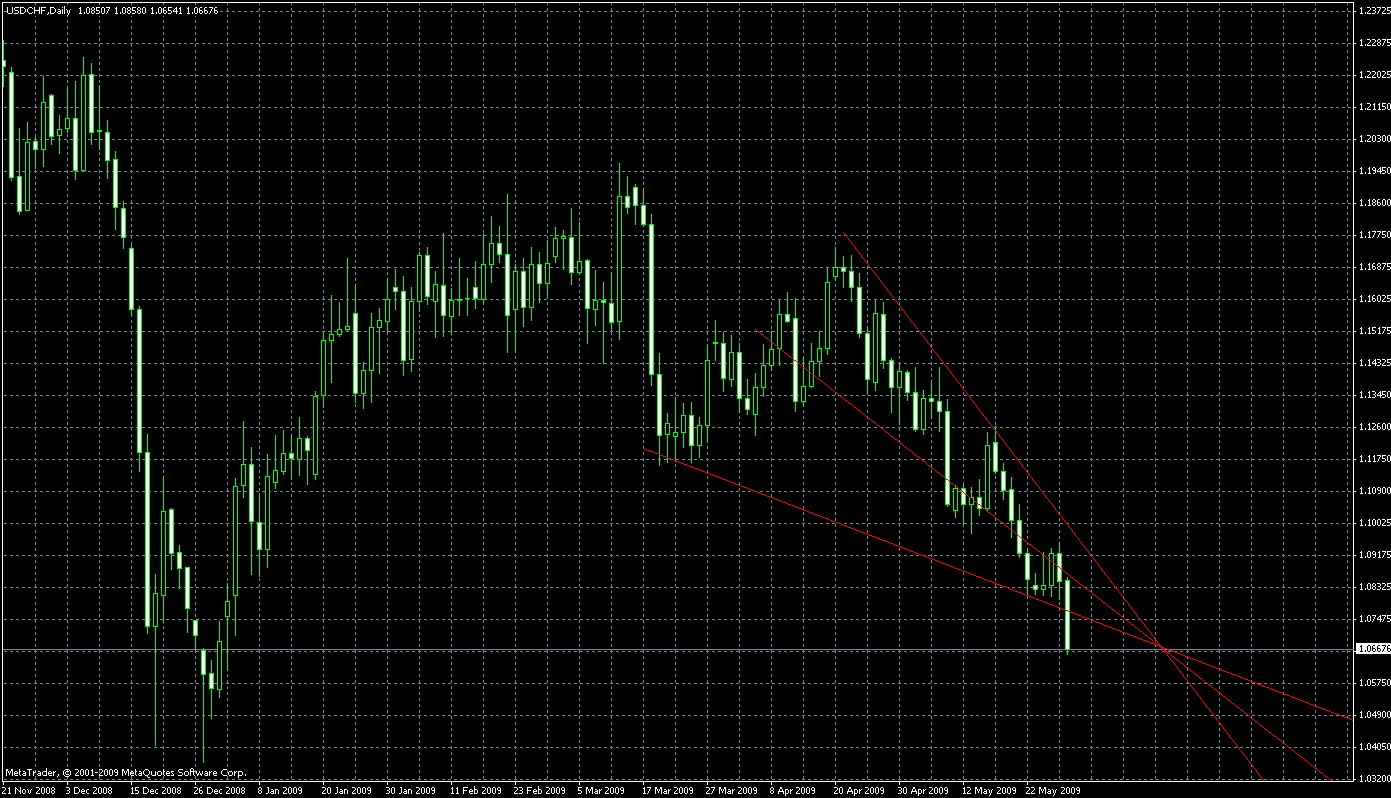
Some Interesting Chart Patterns as of May 31st 2009:

I’d like to share 5 interesting chart patterns that I’ve spotted on the market recently and some of them I currently use in my trading. I won’t give any recommendations regarding their usage here, but if you are familiar with pattern trading then you’ll know how to interpret these images. You can click on any image for a much better and clear picture. Use them on your own risk.

1. EUR/USD, Weekly, 2 Falling Wedges:
EUR/USD, W1, 2009-05-31

2. EUR/JPY, Daily, Ascending Wedge (Triangle):
EUR/JPY, D1, 2009-05-31

3. GBP/JPY, Daily, Ascending Triangle:
GBP/JPY, D1, 2009-05-31

4. USD/CHF, Daily, Falling Wedge:
USD/CHF, D1, 2009-05-31

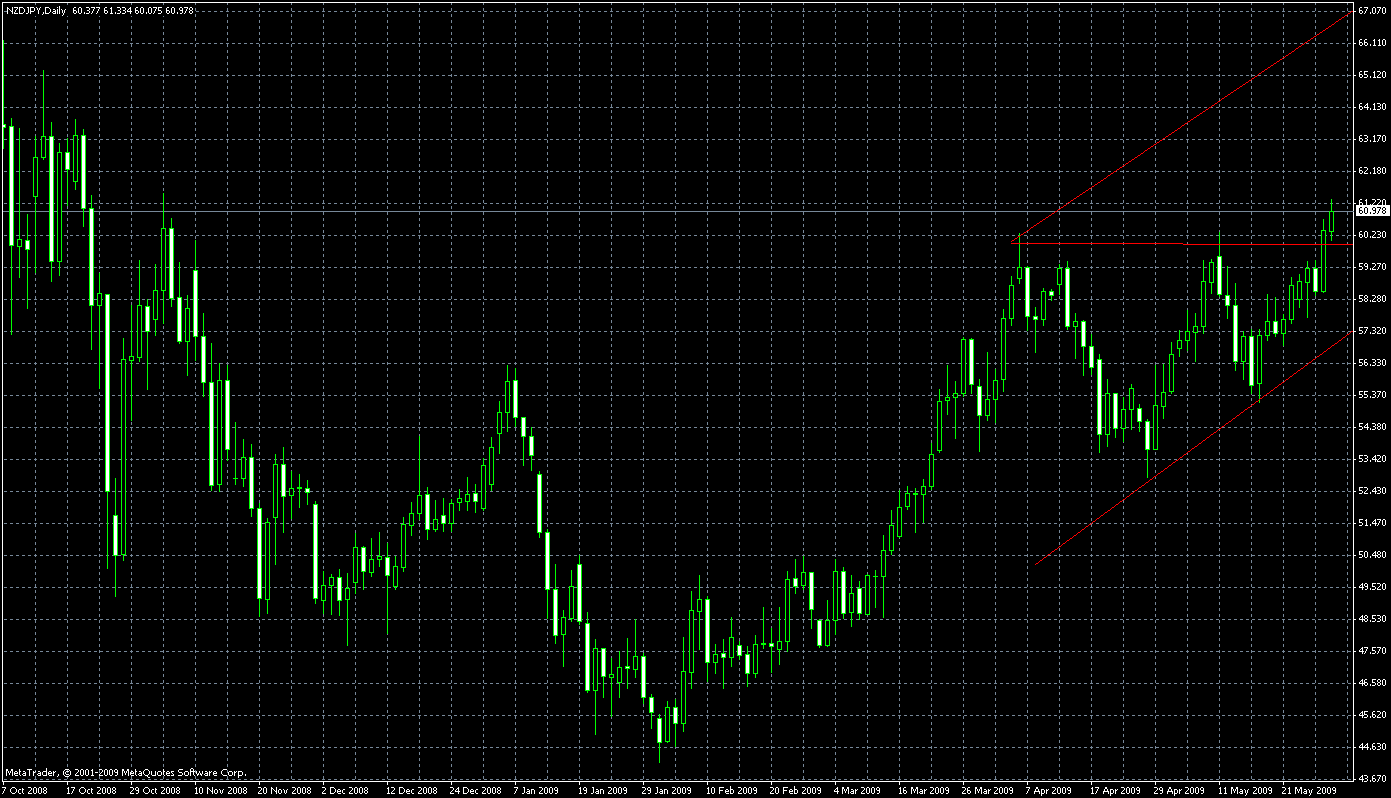
5. NZD/JPY, Daily, Ascending Triangle:
NZD/JPY, D1, 2009-05-31

Monday, June 1, 2009

Forex Achieves New Prominence

The credit crisis has resulted in a collapse in prices for nearly every type of investable asset class (i.e. stocks, bonds, commodities, real estate)- with the notable exception of one: currencies. Of course, this is an inherent quality of forex: a rise in one currency must necessarily be offset by a fall in another currency. While you are probably rolling your eye at the obviousness of this observation, it is still worthwhile to make because it implies that there is always a bull market in forex. Accordingly, capital from both institutions and retail investors continues to pour in to the forex markets, causing daily turnover to surge by 41% (according to one survey), which would imply a total of $4.5 Trillion per day!
Investment banks, especially, are trying to increase their forex business in order to compensate for a decline in other divisions. Said one representative: ”We have probably made more of an aggressive leapfrog in growing our revenue base, which has virtually doubled in 2008 versus 2007. With the situation that has been developing over the past six months, where banks are clearly re-embarking on a new role leading back to basics, foreign exchange has to be one of the products that tops that list.”
Based on New York data, which generally reflects global forex activity, transactions between the Dollar, Euro, and Yen (i.e. not involving outside currencies) now account for more than half of the total.
Contrary to popular belief, however, most foreign exchange transactions involve derivatives, rather than spot trades. In the case of swaps, it is the nominal value of the swap that is reported, which well exceeds the total amount of currency that is exchanged, and thus results in an inflated estimate of total daily turnover. Regardless, all measures point to increasing volume.
One would expect that the increase in both liquidity and the role of derivatives in forex markets would result in a corresponding decrease in volatility. Of course, this is quickly belied by the turbulence of the last six months, in which many currency pairs set daily, weekly, and/or monthly records for fluctuations and volatility.
I recently read an article about so-called “predictive markets,” which use a grassroots approach to make forecasts by “by giving people virtual trading accounts that allow them to buy and sell “shares” that correspond to a particular outcome. Shares in an outcome that is considered more likely to occur then trade at a higher price than those that represent a less likely outcome.” Given that the forex ‘experts’ are almost invariably wrong, I think this idea has tremendous potential to make forex markets even more transparent. Of course, that also means that it will become more difficult to turn a profit, which is why “it’s vitally important to be well-informed when investing in forex so as to enter and exit trades only at levels that are ‘fundamentally’ sound.”